Category: Recycling | 08 Oct 2026
Electronic equipment is now essential to almost every business. Computers, servers, printers, networking devices, monitors, medical electronics, and other digital equipment are regularly upgraded or replaced. But when these products reach the end of their useful life, businesses have a responsibility to ensure they are handled correctly.
This is where E-Waste Compliance becomes important.
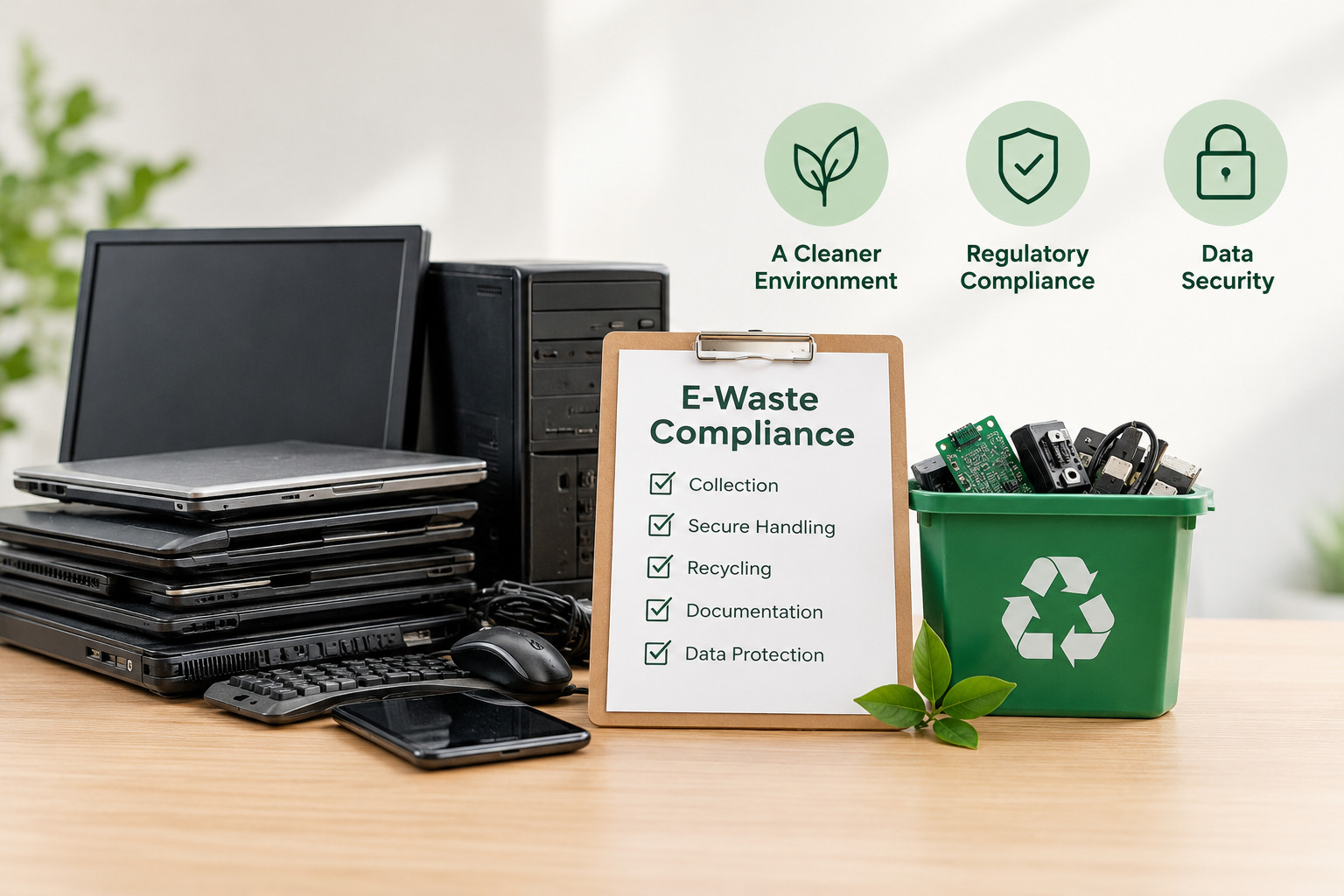
For businesses, compliance is not simply about sending old electronics to a recycler. It involves responsible collection, secure handling, appropriate recycling, documentation, data protection, and understanding the regulatory responsibilities that apply to different stakeholders.
India's current framework is primarily governed by the E-Waste (Management) Rules, 2022, which came into effect on April 1, 2023. The framework includes Extended Producer Responsibility (EPR) and emphasizes environmentally sound management of e-waste.
For organizations in Mumbai and across India, working with an experienced recycling partner can make this process more structured, transparent, and responsible.
E-Waste Compliance refers to following the applicable legal, environmental, operational, and documentation requirements associated with the handling, recycling, and processing of electrical and electronic waste.
The E-Waste (Management) Rules, 2022 cover specified electrical and electronic equipment and apply to manufacturers, producers, refurbishers, dismantlers, and recyclers involved in relevant activities. The framework also establishes an EPR mechanism for producers.
For businesses generating obsolete IT and electronic equipment, compliance should therefore be viewed as part of a broader e-waste management strategy rather than as a one-time disposal activity.
Electronic equipment contains valuable recoverable materials, but it can also contain substances that require responsible handling. Improper dismantling, processing, or disposal can create environmental and occupational risks.
A professional E-Waste Management Company India can help businesses direct obsolete equipment into appropriate recycling and recovery channels.
The objective is to maximize material recovery while ensuring that e-waste is managed in an environmentally sound manner. CPCB identifies protection of health and the environment from adverse effects of e-waste as a central objective of the current rules.
Businesses should understand which compliance responsibilities apply to their particular role. Under India's current framework, EPR obligations primarily apply to producers, while registered recyclers play an important role in environmentally sound processing and the EPR certificate mechanism.
This makes it important for organizations to work with legitimate recycling channels rather than treating every scrap dealer as an equivalent disposal option.
Compliance is also closely connected to information security when discarded equipment contains storage media.
Laptops, desktops, servers, hard drives, SSDs, and other devices may retain confidential information long after they are removed from service. A responsible recycling process should therefore include appropriate data sanitization, secure handling, and documented data destruction procedures where required.
For banks, hospitals, government departments, IT companies, and data centers, this is especially important because improper disposal can create both security and reputational risks.
Extended Producer Responsibility, commonly known as EPR, is a key component of India's current e-waste framework.
Under the E-Waste (Management) Rules, 2022, producers have EPR obligations that are fulfilled through the mechanisms established under the rules and the CPCB's EPR system. CPCB states that producers fulfil applicable EPR obligations through EPR certificates obtained from registered e-waste recyclers.
Therefore, EPR Compliance is particularly relevant for producers and other stakeholders whose activities fall within the scope of the rules.
Businesses should maintain clarity about their role and responsibilities rather than assuming that compliance requirements are identical for every organization.
Selecting a responsible Electronic Recycling Company is an important part of a compliant e-waste strategy.
Before engaging a recycling partner, businesses should consider:
CPCB specifically emphasizes the role of registered recyclers in the EPR system and environmentally sound recycling.
Bhangarwala Waste Management Private Limited (BWM) helps businesses approach electronic waste recycling with a focus on responsible collection, secure asset handling, resource recovery, and environmentally conscious processing.
Organizations should know what equipment they own, where it is located, and when it reaches the end of its useful life.
A documented inventory makes it easier to plan IT asset disposal, identify obsolete equipment, and maintain an auditable process.
Not every device should immediately be treated as waste. Some equipment may be suitable for reuse, refurbishment, resale, or component recovery.
A proper assessment can help businesses recover value while reducing unnecessary waste.
Data-bearing equipment requires special attention. Businesses should establish a clear process for data wiping, sanitization, or physical destruction based on the sensitivity of information and their internal security policies.
Certificates or other appropriate records can help demonstrate that data-handling procedures were followed.
Old electronics should be directed toward appropriate recycling facilities rather than informal disposal routes.
A professional recycling partner can help businesses establish a documented chain of custody from collection through final processing.
Documentation is an important part of responsible E-Waste Compliance.
Businesses should retain relevant records associated with asset movement, recycling, data destruction, invoices, certificates, and other applicable documentation. The exact records required can vary according to the organization's role and regulatory obligations.
Good compliance and sustainability can work together.
Through responsible computer recycling India practices, organizations can help recover materials from obsolete computers and related equipment instead of sending useful resources into uncontrolled disposal streams.
Metals and other recoverable materials can be processed through appropriate recycling systems, helping support resource efficiency and circular-economy principles.
For a company replacing hundreds or thousands of devices, this approach can also make environmental reporting and corporate sustainability initiatives more meaningful.
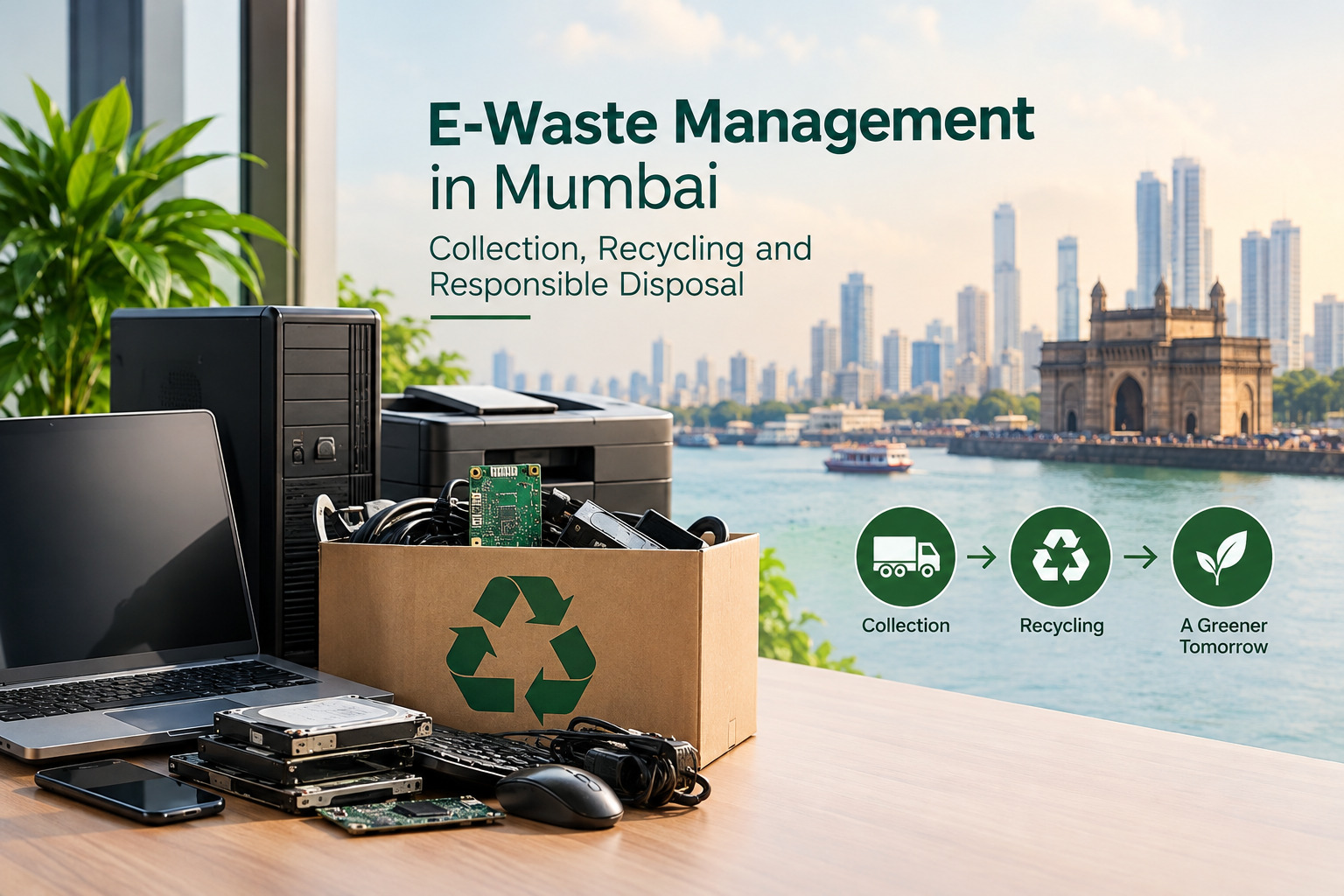
Mumbai's large concentration of corporate offices, financial institutions, technology companies, educational organizations, healthcare facilities, manufacturing businesses, and startups creates a diverse demand for structured electronic waste management.
Organizations operating in Mumbai should consider compliance as part of their procurement, IT asset lifecycle, information-security, and sustainability policies.
Bhangarwala Waste Management Private Limited (BWM) supports businesses looking for structured e-waste recycling and responsible end-of-life management. A professional approach can help organizations manage obsolete electronics while giving appropriate attention to environmental responsibility and data security.
E-Waste Compliance should not begin only when a warehouse becomes full of obsolete electronics. It should be incorporated into the organization's asset lifecycle from procurement and deployment through retirement and recycling.
A strong process can connect IT asset management, information security, procurement, sustainability, finance, and waste management teams.
For larger organizations, periodic internal reviews can help identify gaps in asset tracking, data destruction, documentation, vendor management, and recycling processes.
Bhangarwala Waste Management Private Limited (BWM) can be considered as part of a structured approach to responsible electronic waste handling, particularly for businesses seeking dependable recycling and asset-disposition support in Mumbai.
E-Waste Compliance is an important business responsibility in India's increasingly digital economy. Responsible e-waste management requires more than simply removing obsolete equipment from an office. It requires attention to regulatory responsibilities, data security, environmental protection, recycling practices, documentation, and responsible resource recovery.
The E-Waste (Management) Rules, 2022 established India's current regulatory framework, including an EPR system and requirements for environmentally sound management. Because obligations can differ according to an organization's role, businesses should assess their specific responsibilities and use appropriate registered recycling channels.
By integrating compliance into their IT asset lifecycle and partnering with responsible recyclers, businesses can reduce environmental risks, protect sensitive information, and contribute to a more circular approach to electronics.
It means managing applicable electronic waste responsibilities in accordance with India's regulatory framework, while ensuring appropriate collection, handling, recycling, documentation, and environmental safeguards.
The E-Waste (Management) Rules, 2022 are India's principal current rules governing specified electronic waste activities. They came into force on April 1, 2023 and established an EPR framework for producers and requirements for relevant stakeholders.
EPR Compliance is particularly important for producers covered by the E-Waste (Management) Rules, 2022. The framework places EPR obligations on producers and provides mechanisms involving registered recyclers and EPR certificates.
Businesses should first assess whether equipment can be reused, refurbished, recovered, or recycled. Devices containing sensitive information should undergo appropriate data sanitization or destruction before being processed through responsible recycling channels.
A responsible recycler can provide structured collection and processing, appropriate recycling channels, data-security procedures, asset documentation, and support for environmentally sound end-of-life management.

Bhangarwala Waste Management Pvt. Ltd. is on a mission to Achieve Sustainability through Circularity by providing Waste Recycling Services for Corporates.
