Category: Recycling | 05 Oct 2026
Businesses rely on technology every day. Computers, laptops, servers, printers, networking devices, storage systems, and other IT equipment help organizations manage operations, communicate with customers, and store important business information.
But technology does not last forever. Equipment becomes outdated, reaches the end of its useful life, or is replaced during an IT upgrade. When that happens, businesses need a responsible way to retire their old equipment.
IT Asset Disposal in Thane involves much more than simply removing unwanted electronics from an office. A responsible process should consider data security, asset tracking, environmental protection, recycling, and applicable compliance requirements.
For businesses in Thane, having a structured disposal process can help protect sensitive information while ensuring obsolete equipment is handled through appropriate recycling channels.
Old computers and electronic devices can contain both valuable recoverable materials and components that require responsible handling.
More importantly, devices such as laptops, desktops, servers, and storage drives may contain confidential information even after employees stop using them. Customer records, financial information, business documents, passwords, and other sensitive data can remain on storage media.
Simply throwing electronic equipment away or sending it through an informal scrap channel can therefore create unnecessary security and environmental risks.
A professional approach to IT Asset Disposal in Thane allows businesses to manage these assets through a more controlled process.
Responsible IT asset disposal normally involves several stages. The exact process depends on the type, quantity, condition, and data stored on the equipment.
The first step is to identify which assets are being retired. Businesses may have hundreds or thousands of devices across offices, departments, server rooms, and storage areas.
An asset inventory can include laptops, desktops, servers, hard drives, monitors, printers, networking equipment, cables, and other electronic devices.
Maintaining an accurate record helps businesses understand what is being disposed of and improves accountability throughout the process.
Data security should be addressed before equipment enters the recycling stage.
Businesses should identify devices containing storage media and use an appropriate data sanitization or destruction procedure. Depending on the device and organizational requirements, this may involve secure data wiping or physical destruction of storage media.
Maintaining suitable records of the process can also help businesses demonstrate that retired data-bearing equipment was handled appropriately.
Not every retired device necessarily needs to be treated as waste.
Some equipment may still have reuse or refurbishment potential, while other assets may have reached the end of their practical service life.
Separating equipment according to its condition and intended destination supports better resource utilization and can form part of a broader circular-economy approach.
Equipment that is no longer suitable for reuse can be processed for material recovery.
Through appropriate dismantling and segregation, materials such as metals, plastics, cables, circuit boards, and other components can be recovered and directed toward suitable recycling processes.
For many organizations, data security is the most important consideration when retiring IT assets.
A discarded hard drive or server can potentially contain information that businesses have a responsibility to protect. This makes secure data destruction an essential part of a professional disposal process.
Organizations should establish clear procedures for:
This is especially important for banks, healthcare organizations, IT companies, government departments, data centers, and businesses that handle confidential customer information.
For organizations managing significant volumes of technology, ITAD Services in Thane can provide a more structured approach to retiring IT assets.
IT Asset Disposition, or ITAD, generally covers activities associated with the end of an IT asset's lifecycle. Depending on the provider and business requirements, this may include asset collection, inventory management, data sanitization, reuse or refurbishment, recycling, and reporting.
ITAD can be particularly useful during:
A structured process helps businesses avoid leaving obsolete equipment in storage for extended periods.
Different types of IT equipment require different handling.
Computers and laptops may contain storage drives and other components that need secure processing before recycling.
Servers and storage systems can contain substantial amounts of sensitive business data and therefore require particular attention to data security.
Networking equipment such as routers and switches can contain recoverable electronic components and materials.
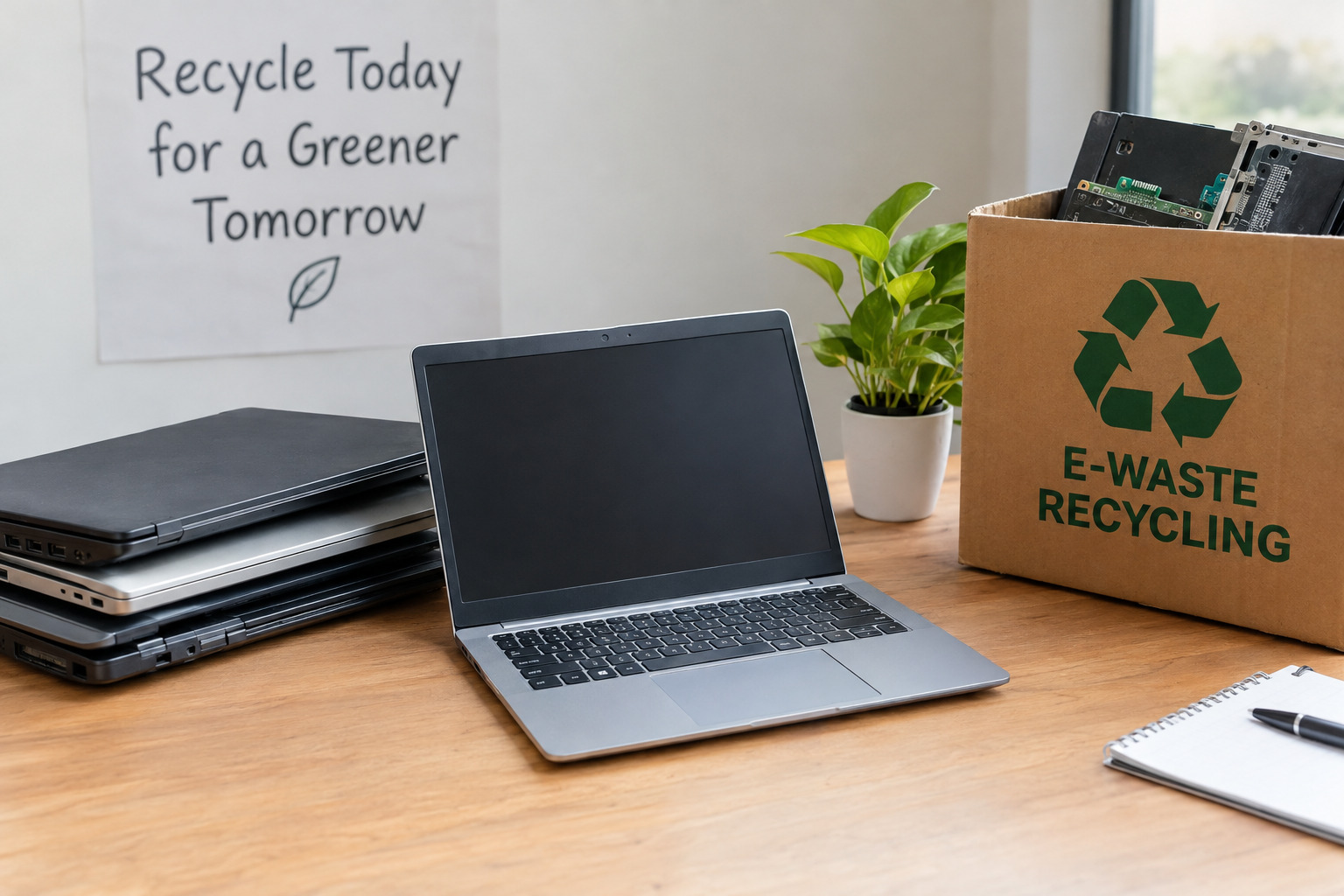
Printers, monitors, cables, and peripherals can also contribute significantly to a company's electronic waste stream.
Professional IT Waste Recycling in Thane helps businesses bring these different categories together under a structured recycling program.
Electronic waste should be handled through responsible recycling channels rather than being treated as ordinary municipal waste.
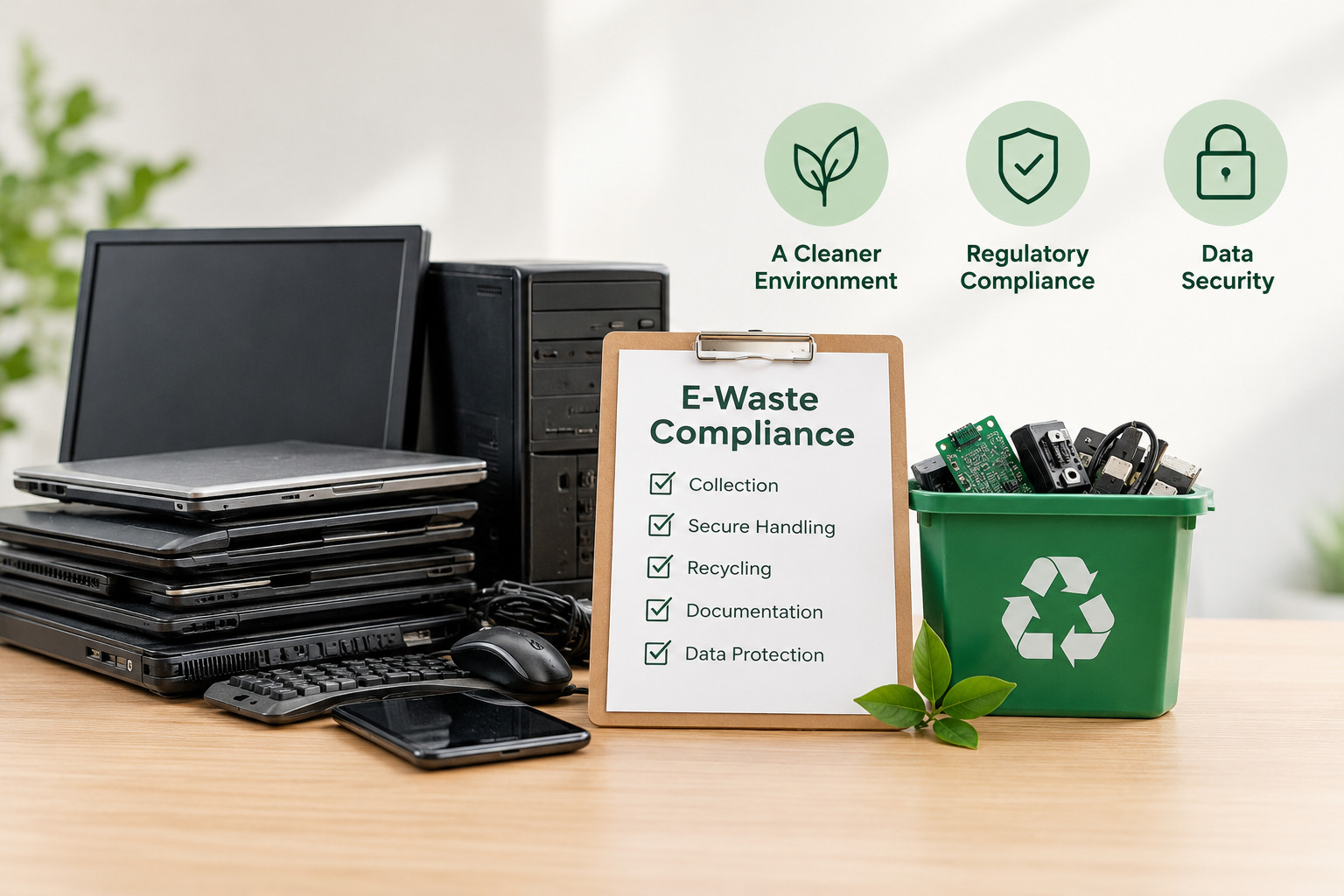
The E-Waste (Management) Rules, 2022 provide India's regulatory framework for e-waste management. The rules came into effect on April 1, 2023 and include Extended Producer Responsibility provisions.
Businesses should therefore consider whether their chosen recycling partner follows appropriate environmental practices and can provide relevant documentation.
Responsible recycling focuses on recovering useful materials while reducing the potential environmental impact associated with inappropriate electronic waste handling.
Compliance requirements can vary depending on the organization's role, the type of equipment involved, and the applicable regulations.
Businesses should maintain appropriate internal records of assets being retired and work with suitable recycling channels. They should also review their own IT security, procurement, environmental, and asset-management policies.
A reliable recycling partner should be able to explain its collection, processing, data-security, and documentation procedures clearly.
This is one reason businesses should evaluate more than just the price of a disposal service.
Businesses can make IT asset disposal easier by following a consistent internal process:
1. Identify: Create a list of obsolete or surplus IT assets.
2. Categorize: Separate laptops, servers, storage devices, networking equipment, and other electronics.
3. Secure: Identify data-bearing devices and arrange appropriate data sanitization or destruction.
4. Collect: Arrange secure collection from the business premises.
5. Process: Direct equipment toward reuse, refurbishment, component recovery, or recycling as appropriate.
6. Document: Maintain relevant asset and recycling records.
This approach creates a clearer chain of responsibility from the moment an asset is retired until its final destination.
Businesses commonly generate several types of electronic waste, including:
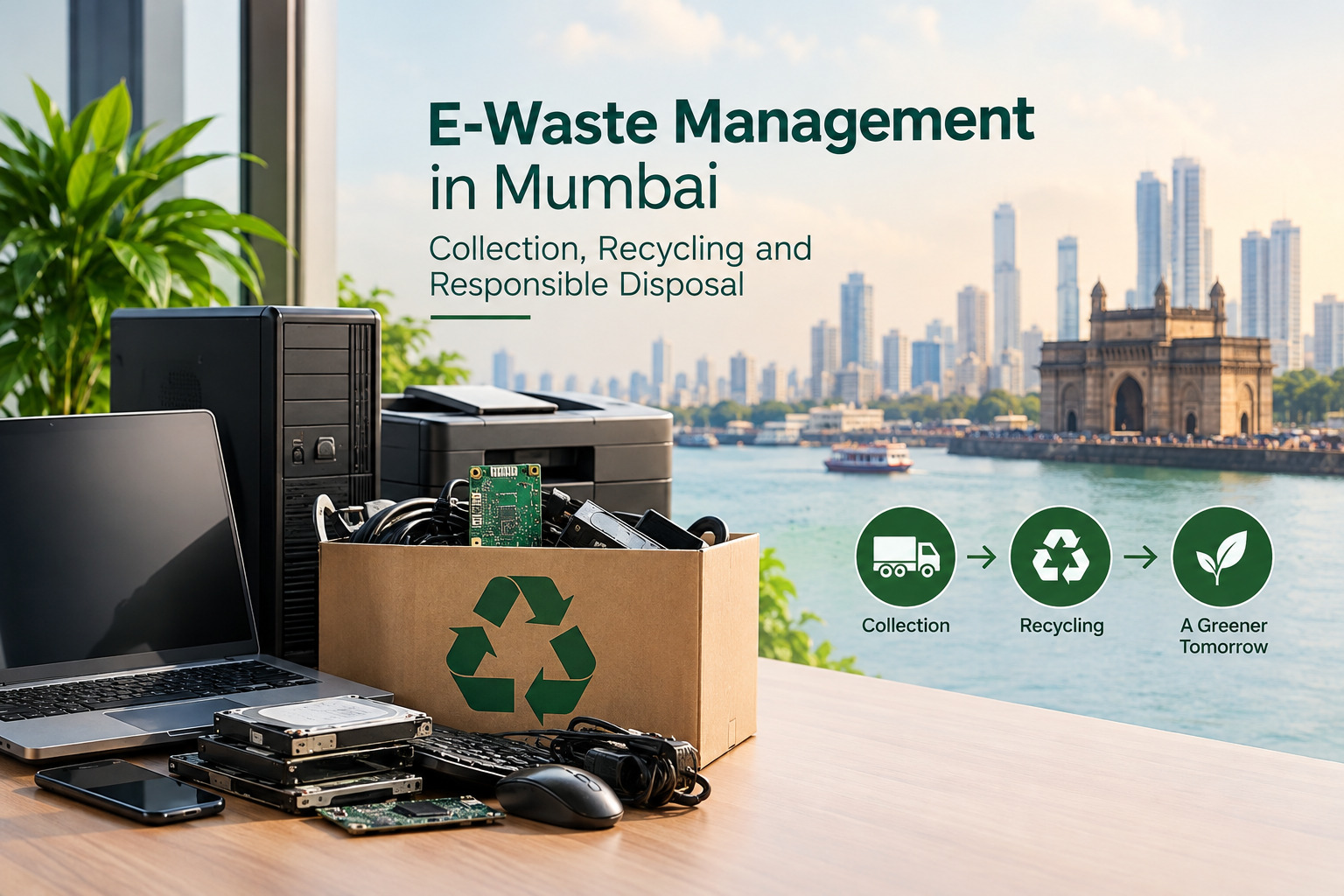
For businesses operating across Thane and Mumbai, Laptop Recycling in Mumbai can also form part of a wider IT asset recycling program.
Choosing a recycling provider is an important part of responsible IT asset management.
Businesses should look at:
A responsible provider should be able to explain what happens to the equipment after collection and how data-bearing assets are handled.
Businesses should also verify relevant credentials and documentation rather than relying solely on marketing claims.
Bhangarwala Waste Management Private Limited (BWM) provides businesses with professional electronic waste management and recycling solutions.
For organizations seeking IT Asset Disposal in Thane, BWM can support the responsible collection and processing of obsolete electronic and IT equipment.
The company's approach focuses on responsible handling, recycling, resource recovery, and the requirements of businesses managing end-of-life technology.
For companies dealing with regular IT upgrades, planned recycling can make the retirement of computers, servers, laptops, and other equipment more organized.
IT asset disposal should not be considered only when a storage room becomes full of old equipment.
Businesses can incorporate disposal planning into their broader IT asset lifecycle. When purchasing new technology, organizations can also consider how existing equipment will eventually be retired, reused, or recycled.
This creates a more complete lifecycle approach—from procurement and use to retirement and responsible recycling.
For businesses in Thane, IT Asset Disposal in Thane can therefore become part of a wider strategy covering information security, environmental responsibility, and efficient asset management.
Old IT equipment can contain sensitive information as well as valuable recyclable materials. Treating it as ordinary waste can create unnecessary security and environmental concerns.
A structured approach to IT Asset Disposal in Thane helps businesses securely retire their technology while supporting responsible recycling and resource recovery.
From laptops and desktops to servers and networking equipment, each asset should be assessed, handled, and processed appropriately. By working with a responsible recycling partner such as Bhangarwala Waste Management Private Limited (BWM), businesses can make IT asset retirement more organized, transparent, and environmentally responsible.
IT asset disposal is the process of retiring obsolete or unwanted IT equipment through collection, data handling, reuse, refurbishment, recycling, or appropriate end-of-life processing.
Businesses should identify data-bearing devices and use an appropriate data sanitization or destruction process before the equipment enters the recycling stage.
Yes. Laptops, servers, desktops, storage devices, and many other IT assets can be directed toward reuse, refurbishment, component recovery, or recycling depending on their condition.
ITAD services can be useful when a business manages large quantities of IT equipment, regular technology upgrades, office relocation, or data-center decommissioning.
Businesses should review the provider's data-security procedures, recycling practices, documentation, environmental approach, experience, and applicable credentials before selecting a service provider.

Bhangarwala Waste Management Pvt. Ltd. is on a mission to Achieve Sustainability through Circularity by providing Waste Recycling Services for Corporates.
