Category: Recycling | 03 Oct 2026
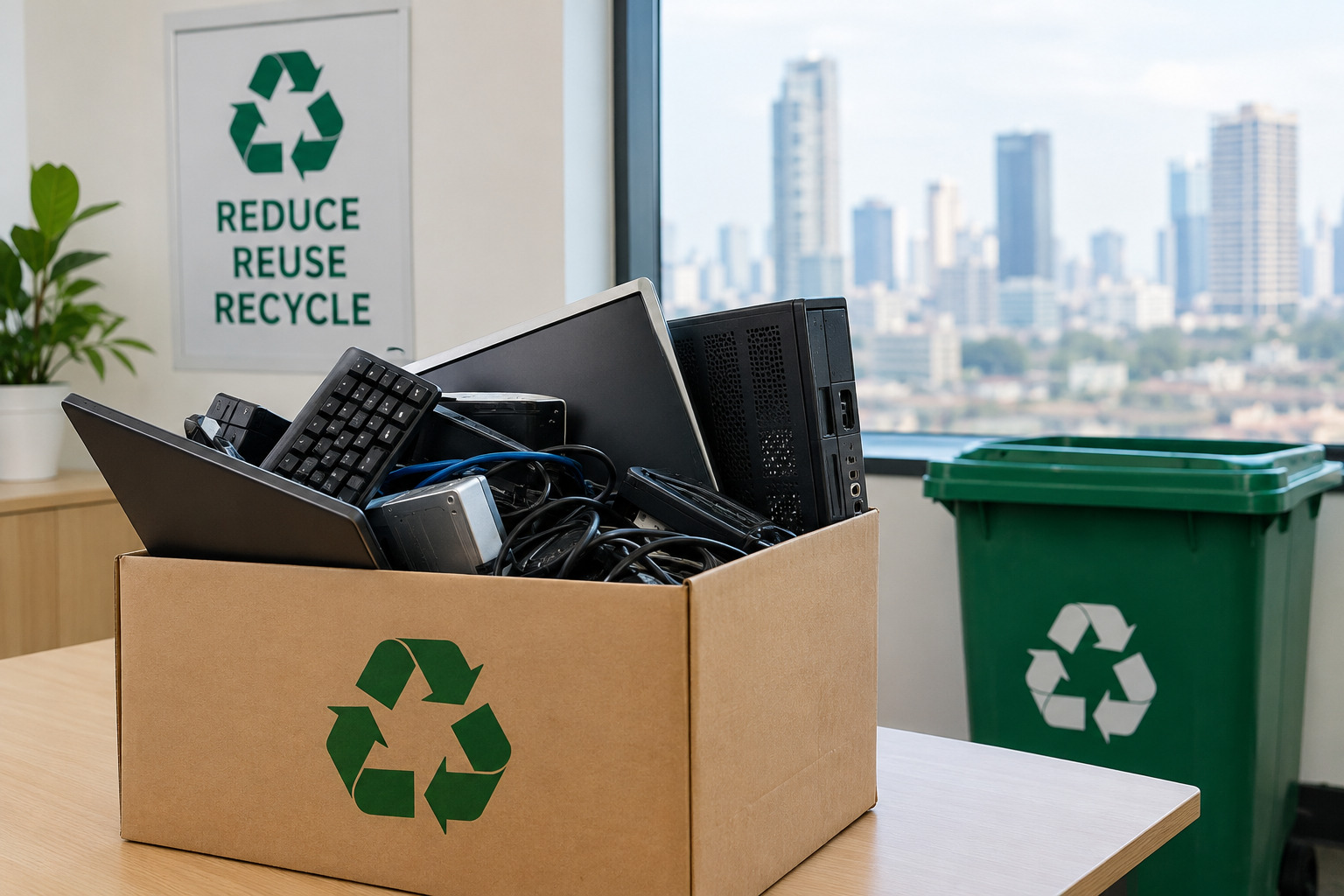
Technology has become an essential part of modern business operations. From computers and laptops to servers, printers, networking equipment, and other electronic devices, organizations rely on technology every day. However, when these devices become outdated or reach the end of their useful life, businesses need a safe and responsible way to manage them.
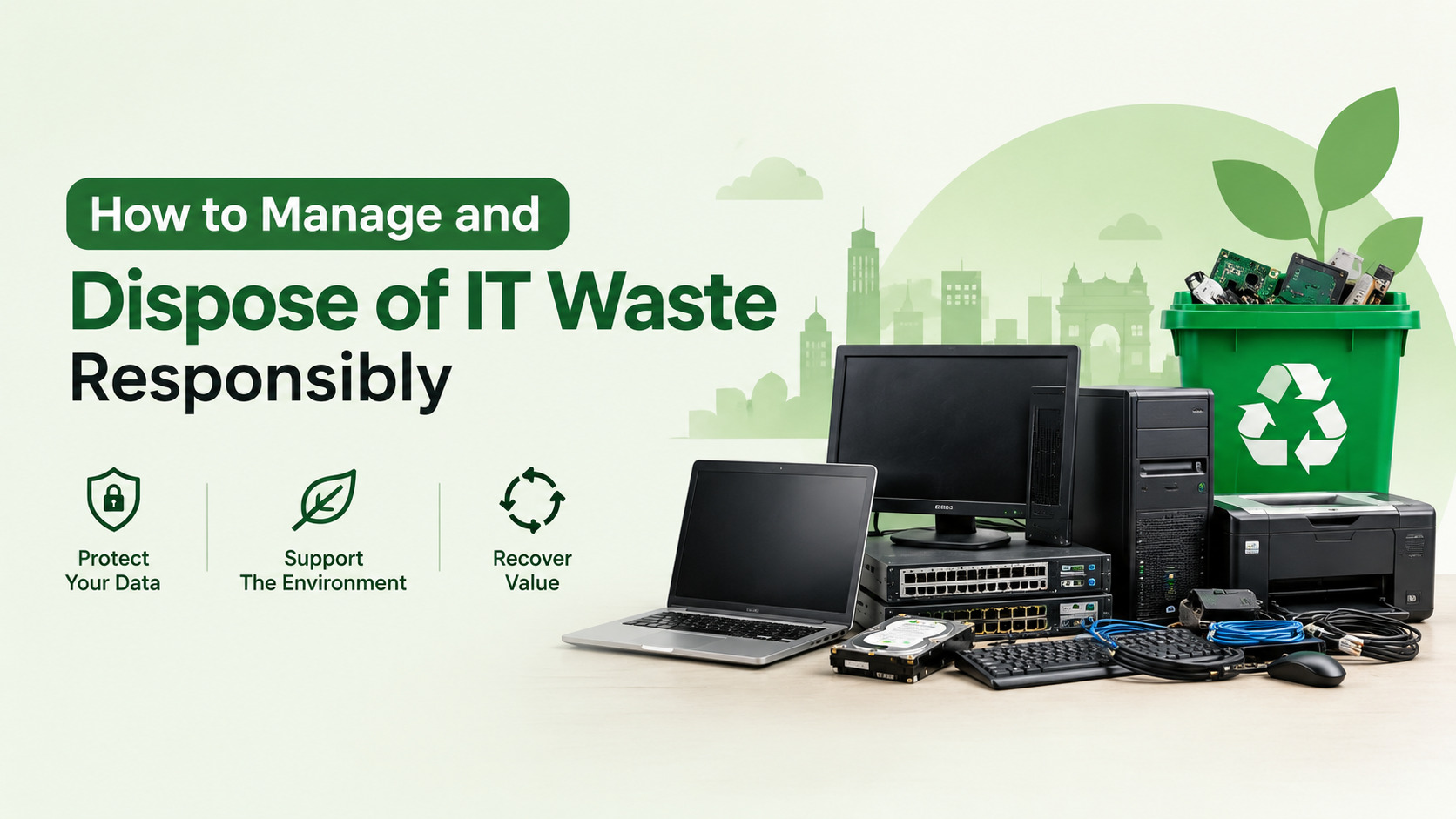
This is where E-Waste Recycling in Navi Mumbai becomes important. Professional e-waste recycling allows businesses to dispose of obsolete electronic equipment while addressing data security, environmental responsibility, and regulatory requirements.
For corporate offices, IT companies, banks, hospitals, educational institutions, government organizations, factories, startups, and data centers, e-waste management should be more than simply getting rid of unwanted equipment. It should involve secure collection, asset assessment, data destruction, responsible dismantling, material recovery, and environmentally sound recycling.
For businesses operating in Navi Mumbai and across the Mumbai region, choosing an experienced recycling partner can help create a more organized and accountable electronic waste disposal process.
Electronic equipment contains materials that can be recovered and reused through appropriate recycling processes. At the same time, some electronic components require controlled handling to prevent environmental risks.
Improper disposal can also create information-security concerns. Old computers, hard drives, SSDs, servers, and other data-bearing devices may still contain confidential business information even after they are no longer being used.
A professional approach to E-Waste Recycling in Navi Mumbai helps businesses manage these risks through a structured process. Instead of treating electronic equipment as ordinary scrap, organizations can ensure that assets are assessed, data-bearing devices are handled securely, and recyclable materials are directed through appropriate recycling channels.
This approach supports both environmental sustainability and responsible business operations.
Navi Mumbai is home to a diverse business ecosystem, including corporate offices, technology companies, financial organizations, educational institutions, industrial facilities, and service businesses. As organizations upgrade their technology, the volume of obsolete electronic equipment can increase.
Responsible recycling helps businesses deal with this growing stream of electronic waste while supporting resource recovery.
Professional E-Waste Recycling Services in Navi Mumbai can be particularly useful during office relocation, IT infrastructure upgrades, server replacements, business expansion, or large-scale equipment refresh programs.
Instead of allowing old electronics to accumulate in storage areas, businesses can establish a planned disposal process that provides better control and traceability.
Data security is one of the most important considerations when disposing of electronic equipment.
A retired laptop may contain business documents. A hard drive may hold customer information. A server may contain databases, application data, credentials, or other sensitive information. Simply deleting files does not necessarily provide the level of assurance required for secure disposal.
Before data-bearing assets enter the recycling stage, organizations should follow an appropriate data sanitization or destruction procedure based on the type of equipment and their internal security requirements.
Depending on the asset and applicable process, this may include secure data wiping or physical destruction of storage media. Businesses should also maintain suitable records for asset identification and processing.
For organizations handling confidential information, secure IT Asset Disposition should therefore be an integral part of electronic waste management rather than an afterthought.
A reliable recycling program follows a controlled process from the moment electronic equipment is collected until recyclable materials are recovered.
The process begins with planned Corporate E-waste Pickup from the organization's premises. Equipment can be categorized according to its type, quantity, condition, and potential for reuse or recycling.
An organized collection process also helps businesses maintain better records of the assets being retired.
Data-bearing equipment is identified and processed according to the required security procedure. This helps reduce the risk of sensitive information remaining on devices after they leave the organization's premises.
Once equipment has been appropriately processed, it can be sorted and dismantled. Components such as metals, plastics, cables, circuit boards, and other recoverable materials can be separated for further processing.
The recovered materials are directed through appropriate recycling processes. The objective is to maximize resource recovery while reducing the environmental impact associated with improper disposal.
This structured approach makes E-Waste Recycling in Navi Mumbai a practical option for organizations seeking greater control over their obsolete electronic assets.
For IT companies, banks, data centers, telecom businesses, and large corporate offices, retiring servers and networking equipment can be a significant part of the asset lifecycle.
Server Recycling requires particular attention because servers may contain sensitive business information as well as valuable electronic components.
A responsible server recycling program should consider data security, asset tracking, equipment segregation, and material recovery. Businesses can therefore manage end-of-life infrastructure through a controlled process rather than treating servers as conventional scrap.
The same principle applies to laptops, desktops, networking devices, storage equipment, printers, monitors, and other electronic assets.
Sustainability is increasingly becoming part of corporate planning and reporting. Businesses are looking beyond conventional waste disposal and exploring ways to improve resource efficiency.
Responsible electronic waste recycling contributes to these efforts by enabling useful materials to be recovered from obsolete equipment. It can also support circular-economy principles by encouraging reuse and recovery wherever practical.
For businesses, office electronics recycling can form part of a broader sustainability program covering procurement, asset lifecycle management, waste reduction, and responsible disposal.
The objective is not simply to remove unwanted equipment. It is to establish a transparent system that manages assets responsibly throughout their lifecycle.
Businesses should also consider the regulatory requirements associated with electronic waste management in India.
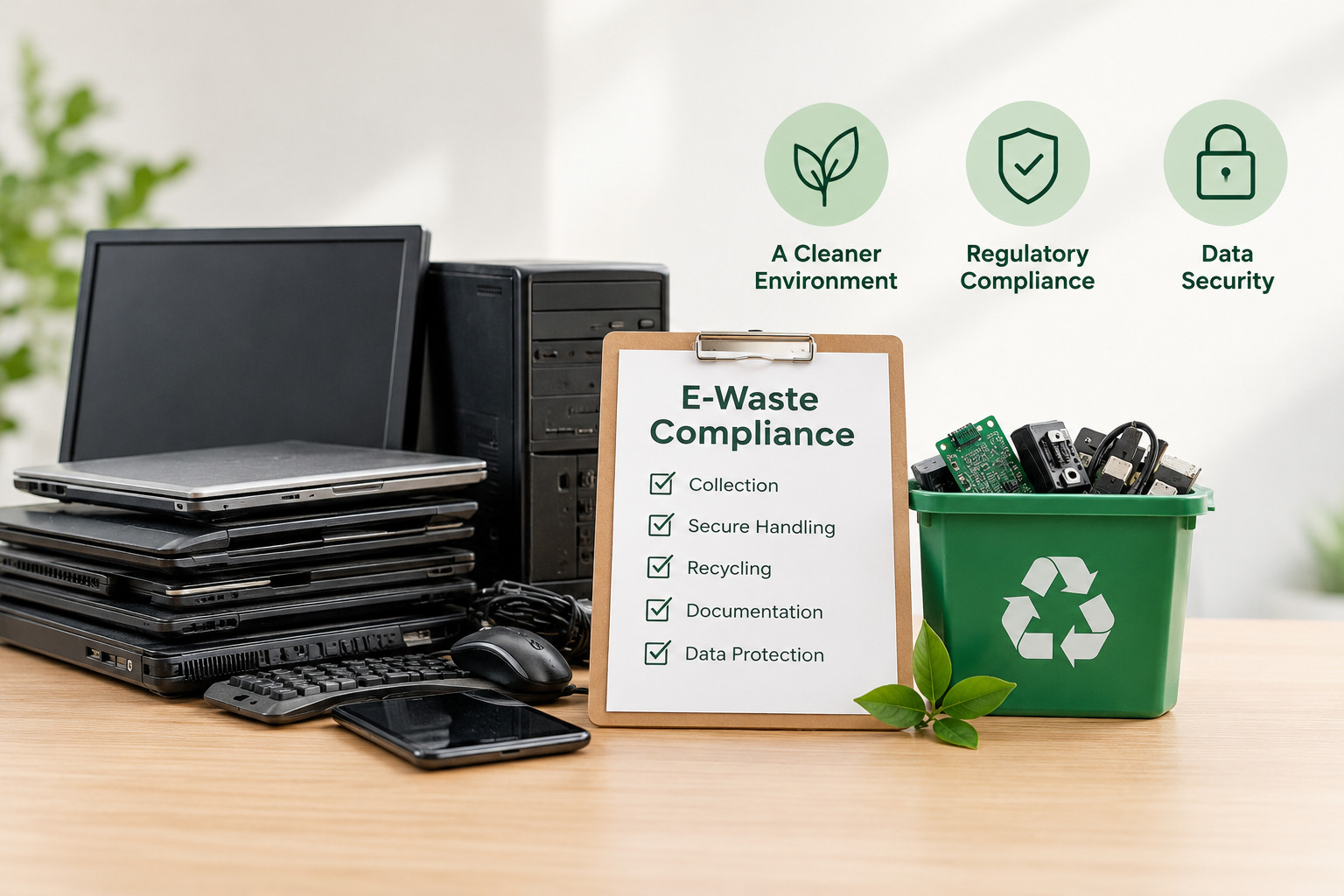
The E-Waste (Management) Rules, 2022 provide the current regulatory framework for e-waste management and came into effect on April 1, 2023. The framework includes Extended Producer Responsibility (EPR) provisions and emphasizes environmentally sound management through appropriate channels.
Organizations should select recycling partners that understand applicable requirements and can provide appropriate documentation for the recycling process.
Businesses should also align their e-waste disposal procedures with their internal environmental, information-security, procurement, and asset-management policies.
Different organizations generate different types of electronic waste.
Corporate offices may need to dispose of computers, monitors, printers, and networking equipment. IT companies may regularly replace laptops, servers, storage devices, and other infrastructure. Banks and government organizations may require additional attention to data security and asset documentation.
Educational institutions may generate e-waste from computer laboratories and administrative equipment, while factories may have electronic control systems and office electronics requiring responsible disposal.
A professional E-Waste Recycling in Navi Mumbai program can be adapted to the organization's equipment, volume, collection requirements, and asset-disposal procedures.
The recycling company you choose can have a direct impact on the security, transparency, and environmental responsibility of your disposal process.
Businesses should consider factors such as:
A recycling partner should be able to explain its process clearly rather than simply offering to collect electronic scrap.
Bhangarwala Waste Management Private Limited (BWM) provides businesses with a structured approach to electronic waste management.
For organizations looking for E-Waste Recycling in Navi Mumbai, BWM focuses on responsible collection, secure handling, recycling, and resource recovery. Its business-oriented approach is suitable for organizations managing obsolete IT equipment and electronic assets as part of regular technology upgrades.
Whether a business requires corporate e-waste collection, server recycling, or office electronics recycling, the objective should be to ensure that retired equipment is managed through a responsible and transparent process.
Businesses can evaluate a recycling partner based on its processes, documentation, security practices, environmental approach, and ability to handle organizational requirements at scale.
Electronic waste is both an environmental responsibility and a business-management challenge. Old computers, servers, storage devices, networking equipment, and office electronics can contain valuable recoverable materials while potentially holding sensitive information.
A structured E-Waste Recycling in Navi Mumbai program enables organizations to address both concerns through secure collection, appropriate data handling, material recovery, and responsible recycling.
By adopting better electronic waste management practices, businesses can reduce unnecessary disposal, support resource recovery, strengthen asset accountability, and contribute to a more sustainable future for Navi Mumbai and the wider Mumbai region.
E-waste recycling in Navi Mumbai involves the collection, sorting, processing, recovery, and responsible recycling of discarded electrical and electronic equipment generated by businesses and other organizations.
Yes. Businesses can arrange corporate e-waste pickup based on the type, quantity, and location of their obsolete electronic equipment. Scheduled collection can help organizations manage large volumes more efficiently.
Companies should identify all data-bearing devices and use appropriate data sanitization or destruction procedures before sending them for recycling. Asset records and processing documentation can provide additional accountability.
Depending on the recycling program, equipment can include computers, laptops, servers, monitors, printers, networking devices, cables, storage equipment, and various other electrical and electronic assets.
Professional recycling provides a structured approach to collection, data security, asset handling, environmental management, material recovery, and documentation. It can help businesses manage electronic waste more responsibly than informal disposal methods.

Bhangarwala Waste Management Pvt. Ltd. is on a mission to Achieve Sustainability through Circularity by providing Waste Recycling Services for Corporates.
