

Compliance in waste recycling refers to adhering to the various laws, regulations, and standards that govern the collection, handling, processing, and disposal of waste materials. Ensuring compliance in waste recycling is crucial for environmental protection, public health, and the efficient management of waste streams.
Let us see how BWM can help businesses achieve 100% compliance in key area of waste recycling
Permits and Licensing
Recycling facilities must obtain the necessary permits and licenses from relevant environmental agencies and local authorities. These permits specify the type of materials that can be handled, processing methods, and operational parameters.
Environmental Regulations
Compliance with environmental regulations is essential. These regulations govern emissions, discharge, and the impact of recycling operations on air and water quality. Facilities must manage emissions, runoff, and other environmental impacts within legal limits.
Hazardous Waste Management
If recycling operations involve hazardous materials, compliance with hazardous waste management regulations is crucial. This includes proper storage, handling, labeling, and disposal of hazardous waste.
Waste Transport
Compliance with regulations related to the transportation of waste materials is vital. Proper labeling, packaging, and handling of waste during transportation are critical.
Record Keeping
Detailed record keeping is often required to demonstrate compliance. This may include records of waste quantities, disposal receipts, permits, and documentation of safety and environmental compliance efforts.
Recycling Targets and Reporting
Many regulatory authorities require regular reporting on waste management activities, emissions, and environmental impacts. Accurate and timely reporting is necessary to maintain compliance.
Some jurisdictions have specific recycling targets and reporting requirements for recycling facilities. This may include reporting on the percentage of materials recycled and the reduction of waste sent to landfills.
Non-compliance with waste recycling regulations can result in fines, legal action, damage to a facility's reputation, and environmental harm. Therefore, recycling facilities and organizations involved in waste management should establish robust compliance programs, keep abreast of changing regulations, and actively work to meet or exceed legal requirements to promote sustainability and environmental responsibility.
Compliance Certifications for BWM
E-Waste Certificate
EPR authorisation means permission granted by the Central Pollution Control Board to the manufacturer, dismantler, refurbisher and recycler for the generation, handling, collection, reception, storage, transportation, refurbishing, dismantling, recycling, treatment and disposal of e-waste.
Maharashtra Pollution Control Board
It is required to be obtained by the establishment before commission of industry and to discharge effluents into water, air, and land according to the pollution act. The consent to operate shall be obtained by MPCB within the prescribed time.
International Quality Management System
ISO stands for the International Organisation for Standardisation which currently comprises the national standards bodies of 91 nations. Its function is to develop global standards in an effort to improve the exchange of goods and services internationally.
CERTIFICATES
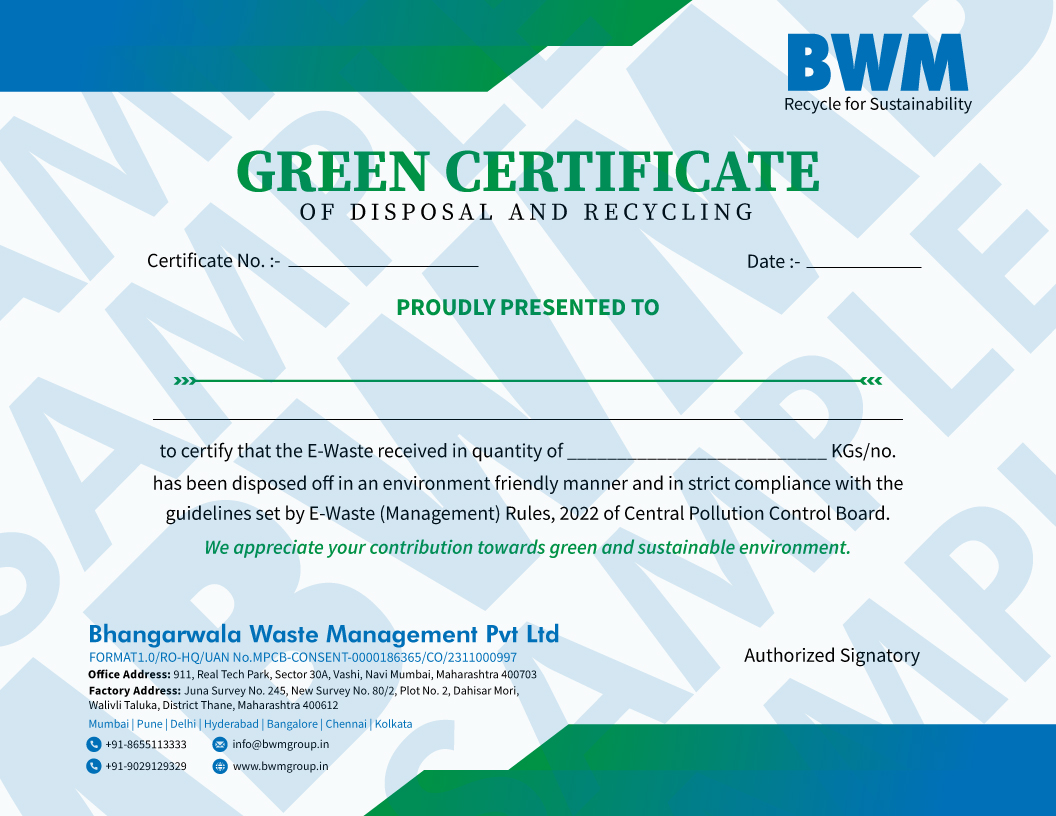
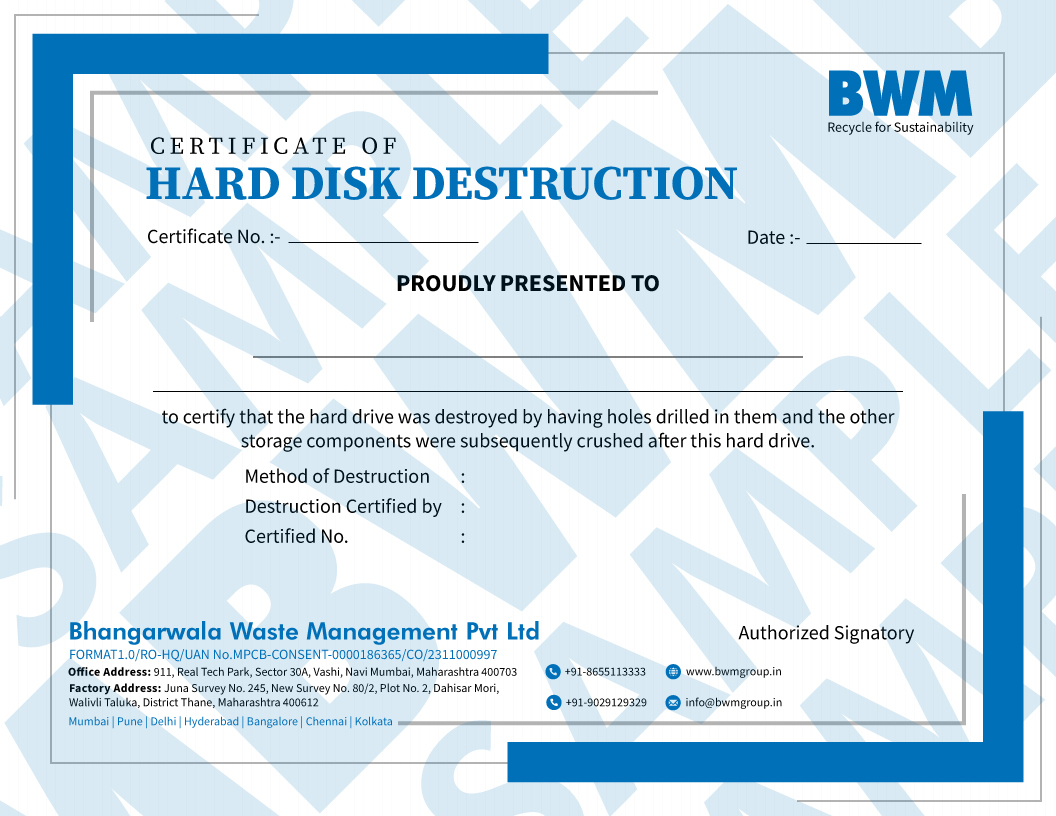
Post Recycling Compliance Certificates
BWM is on a mission to Achieve Sustainability through Circularity by providing Waste Recycling Services for Corporates.