E-Waste in India: A Growing Concern
In the era of rapid technological advancements, the use of electronic devices has become an integral part of daily life. However, the dark side of this progress is the alarming rise in electronic waste, or e-waste, generated globally. In India, the issue of e-waste is particularly significant, with businesses and corporations contributing significantly to the growing problem.
Let us delve into the increasing trend of e-waste generation in India, highlighting numerical figures, major cities, recycling rates, the role of the unorganized sector, and forecasts for the future.
Yearly Increase in E-Waste Generation in India
India has witnessed a staggering increase in e-waste generation over the past decade.
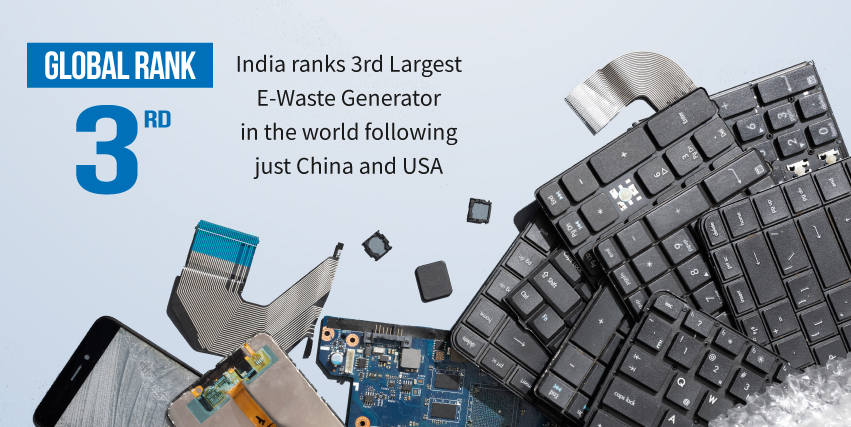
According to the Global E-Waste Monitor 2020, India generated approximately 3.2 million metric tons of e-waste in 2019, making it the third-largest contributor to e-waste globally, after China and the United States. This figure marked a significant increase from the 2 million metric tons generated in 2016.
The trend suggests that e-waste generation in India is on an upward trajectory, driven by the proliferation of electronic devices across various industries.
Major Cities of India generating E-Waste
E-waste generation is not evenly distributed across the country, as the major cities are emerging as hotspots for electronic waste.
Among the cities contributing significantly to the e-waste crisis, Mumbai, Delhi, Bangalore, and Chennai stand out. These metropolitan areas are not only hubs for technological development but also witnesses to extensive consumerism and rapid technology turnover.
Mumbai, as the financial capital of India, produces a substantial amount of e-waste, fueled by the constant upgrade of electronic gadgets in the business and financial sectors.
Delhi, the national capital, follows closely due to its dense population and robust IT infrastructure.
Bangalore, known as the "Silicon Valley of India," is a prominent contributor due to its thriving IT industry.
Chennai, with a burgeoning manufacturing sector, adds to the e-waste generated by businesses.
E-Waste Recycling Rate in India
Despite the growing concern surrounding e-waste, the recycling rates in India remain disconcertingly low.
According to the Global E-Waste Monitor 2020, only about 22.7% of India's e-waste was formally documented to be collected and recycled.
The informal sector, comprising small-scale operators and waste pickers, plays a crucial role in handling the remaining e-waste. The organized recycling sector primarily operates in urban areas, collaborating with businesses to manage their electronic waste responsibly.
However, due to the informal nature of the e-waste handling industry, a significant portion of electronic waste ends up in landfills, posing environmental and health risks. The unregulated disposal of e-waste often involves the extraction of valuable metals through unsafe methods, releasing hazardous substances into the environment.
Role of the Unorganized Sector in E-Waste Recycling in India
The unorganized sector, consisting of informal recyclers and waste pickers, plays a dual role in India's e-waste management.
On one hand, these individuals contribute significantly to the recycling process, extracting valuable materials from electronic devices. On the other hand, their methods are often rudimentary and lack proper safety measures, leading to environmental pollution and health hazards.
A substantial percentage of e-waste in India is handled by the unorganized sector, estimated to be around 95% according to the Associated Chambers of Commerce and Industry of India (ASSOCHAM). This highlights the urgent need for a comprehensive approach to formalize and regulate the informal e-waste handling practices to minimize the adverse effects on both the environment and human health.
Forecasts for E-Waste Generation in India
Looking ahead, the future projections for e-waste generation in India are alarming. With the rapid pace of technological innovation and the increasing reliance on electronic devices, it is anticipated that the e-waste crisis will continue to worsen.
The Indian government has recognized the severity of the issue and has implemented policies and regulations to address it. However, effective enforcement and awareness campaigns are essential to bring about a significant change.
According to a report by the Ministry of Environment, Forest and Climate Change, the total e-waste generation in India is expected to reach 5.2 million metric tons by 2021 and could further escalate to 20 million metric tons by 2030 if stringent measures are not implemented.
These figures underscore the critical need for sustainable e-waste management practices and increased awareness among businesses, corporations, and the general public.
We, at BWM, have taken an initiative to address this critical need for e-waste management and recycling in India. We are committed to the responsible recycling and recovery of electrical equipment, ensuring that no resource is wasted and that our environment is not harmed, conserving vital resources, and safeguarding the world for future generations.
If your organization has any type of E-Waste which needs to be disposed of or recycled responsibly, please contact us on this page. (link this sentence to Pickup page here, https://bwmgroup.in/Pickup.php)
Concluding for E-Waste Generation in India
The surge in e-waste generated by businesses and corporations in India is a matter of grave concern, necessitating immediate and concerted efforts to address the issue. The escalating numbers, major city hotspots, low recycling rates, and the significant role played by the unorganized sector emphasize the urgency for comprehensive e-waste management strategies.
Businesses and corporations must adopt responsible and sustainable practices, including proper disposal of electronic devices, encouraging recycling initiatives, and supporting the formal e-waste recycling sector. Government regulations need to be rigorously enforced, and awareness campaigns should educate the public about the environmental and health implications of improper e-waste disposal.
As India continues to embrace technological advancements, it is crucial to ensure that this progress does not come at the cost of environmental degradation and public health. By collectively addressing the e-waste challenge, businesses, corporations, and policymakers can pave the way for a sustainable and environmentally conscious future.