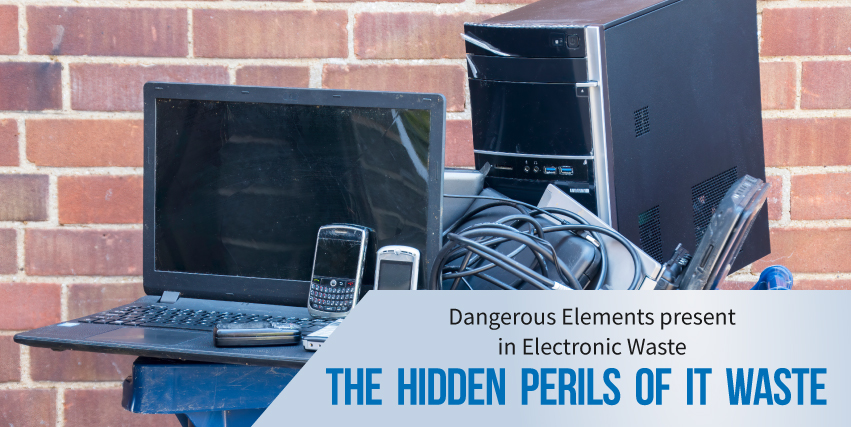
The Hidden Perils of IT Waste: Dangerous Elements present in
Electronic Waste
In the ever-evolving landscape of technology, corporations are
constantly upgrading their electronic and IT infrastructure to stay competitive and
meet the demands of the digital era. However, this rapid pace of innovation comes at
a cost, and one often overlooked is the generation of electronic and IT waste. This
waste, laden with dangerous elements, poses significant environmental and health
risks.
Today, we will explore the perilous components of electronic and IT
waste generated by corporations, shedding light on the need for responsible disposal
and recycling practices.
Heavy Metals and Toxic Substances
Electronic and IT waste from corporations often contain a cocktail of
heavy metals and toxic substances. Among the most concerning are lead, mercury,
cadmium, and brominated flame retardants. These elements are integral to the
manufacturing of electronic components, but their improper disposal can have severe
consequences.
Lead in E-Waste
Found in older cathode ray tube (CRT) monitors, lead is known to impair
neurological development in children and cause reproductive issues in adults. Its
persistence in the environment makes it a long-term threat.
Mercury in E-Waste
Often present in fluorescent lamps, batteries, and certain switches,
mercury poses a serious threat to aquatic ecosystems and human health. Its
bioaccumulative nature means that even small amounts can have far-reaching
consequences.
Cadmium
Commonly found in rechargeable batteries and semiconductors, cadmium
exposure is linked to lung and prostate cancer. Its presence in soil can lead to
contamination of crops, further affecting the food chain.
Brominated Flame Retardants (BFRs)
Used in the production of circuit boards and plastic casings, BFRs can
release toxic substances during the disposal process, posing health risks and
environmental contamination.
E-Waste and Global Environmental Impact
The global impact of electronic and IT waste is staggering. According
to the Global E-waste Monitor, approximately 53.6 million metric tons of e-waste
were generated worldwide in 2019, with only 17.4% officially documented as properly
collected and recycled. The remaining waste often ends up in landfills or informal
recycling operations, contributing to soil and water pollution.
Soil Contamination
Improper disposal of electronic waste in landfills allows toxic
substances to leach into the soil, affecting the quality of agricultural land. This
contamination can persist for years, impacting ecosystems and potentially entering
the food chain.
Water Pollution
When electronic waste is not recycled responsibly, the toxic components
can seep into groundwater, rivers, and oceans. This not only endangers aquatic life
but also poses risks to communities relying on contaminated water sources.
Health Risks to Workers
The informal recycling sector, prevalent in many developing countries,
is notorious for exposing workers to hazardous conditions. Individuals involved in
dismantling and processing electronic waste without proper protective measures face
severe health risks.
Inhalation of Toxic Fumes
Burning or melting electronic components to extract valuable metals
releases toxic fumes. Workers inhale these fumes, leading to respiratory problems,
cardiovascular issues, and long-term health complications.
Direct Contact with Hazardous Materials
Workers in informal recycling operations often handle electronic waste
without protective gear, putting them at risk of direct exposure to harmful
substances. Skin contact or ingestion of contaminated food can lead to various
health disorders.
Lack of Regulations and Enforcement
One of the contributing factors to the hazardous nature of electronic
waste lies in the inadequate regulations and enforcement mechanisms in place. Many
countries lack comprehensive e-waste management policies, allowing corporations to
dispose of their obsolete equipment irresponsibly.
Legal and Regulatory Gaps
In some regions, there is a lack of clear legislation addressing the
disposal and recycling of electronic waste. This absence of guidelines allows
corporations to sidestep their responsibility and contributes to the improper
handling of e-waste.
Weak Enforcement
Even when regulations exist, weak enforcement undermines their
effectiveness. Insufficient monitoring and penalties for non-compliance provide
little incentive for corporations to adopt responsible e-waste management practices.
Concluding the Hidden Perils of IT Waste
The dangers posed by electronic and IT waste generated by corporations
are substantial and multifaceted, affecting both the environment and human health.
To address this issue, a comprehensive approach is required, involving stringent
regulations, effective enforcement, and corporate responsibility. As the world
continues to embrace technological advancements, it is imperative that we also
prioritize sustainable practices to mitigate the hidden perils of electronic and IT
waste. By doing so, we can pave the way for a future where innovation coexists
harmoniously with environmental conservation and human well-being.