Understanding Corporate Electronic Waste Types | E-Waste & IT Waste
In our increasingly digital world, the corporate sector relies heavily on electronic devices and technology. While these tools have undoubtedly improved efficiency and productivity, they also give rise to a significant environmental challenge: corporate electronic waste, often abbreviated as e-waste.
Corporate Electronic Waste Defined
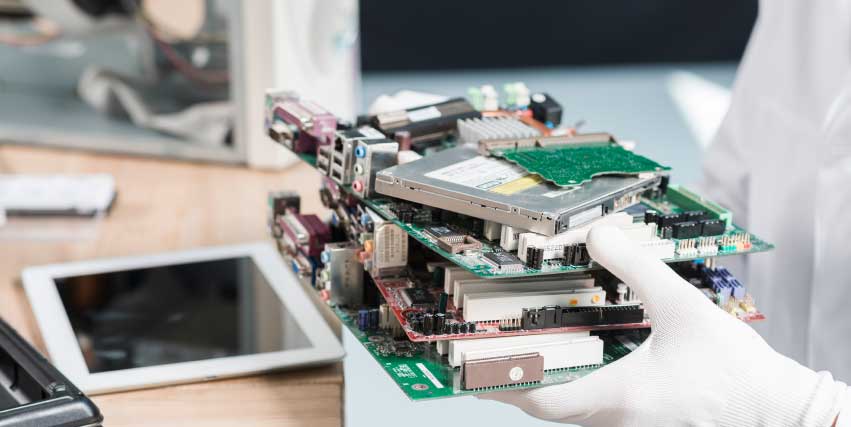
Corporate electronic waste refers to any discarded electronic equipment and devices generated by businesses, institutions, and organizations. This electronic waste encompasses both broken or outdated equipment and those that are still in working condition but are no longer deemed useful by the organization.
Corporate electronic waste is not a one-size-fits-all concept. These wasted or broker electronic equipment are largely divided into two categories, often as E-Waste and IT Waste.
Let us now delve deeper into these two distinct categories of IT Waste and E-Waste.
What are IT Waste items?
The IT products such as computers, smartphones, and servers are often categorized under IT Waste.
End-of-Life IT Products
These are electronic devices that have reached the end of their functional lifespan and are no longer cost-effective to repair or upgrade. Examples include old desktop computers, laptops, and servers. End-of-life electronics are a significant contributor to e-waste as technology evolves rapidly, rendering older devices obsolete.
Discarded Smartphones and Tablets
As businesses frequently upgrade their mobile devices to stay competitive, the number of discarded smartphones and tablets continues to rise. These devices contain precious metals and rare earth elements, making their recycling important for resource conservation.
Networking Equipment
Routers, switches, and other networking devices are essential components of modern corporate infrastructures. When replaced or upgraded, these devices contribute to the IT waste stream. They often contain hazardous materials like lead, which must be handled carefully during disposal.
Data Storage Devices
Hard drives, external storage devices, and backup tapes used by corporations to store vast amounts of data can become obsolete or fail over time. Proper disposal and data destruction are crucial to ensure data security while managing e-waste responsibly.
What are E-Waste items?
All the electronic equipment such as printers, photocopiers, transformers and ACs are categorized under the term E-Waste.
Obsolete Office Equipment
Corporations often discard office equipment such as photocopiers, printers, fax machines, and scanners when they become outdated or inefficient. These machines contain various electronic components and can add up to substantial e-waste volumes.
Cables and Accessories
While relatively small, the collective volume of discarded cables, chargers, and electronic accessories can be significant. These items often end up in landfills when not properly managed.
Batteries
Rechargeable batteries used in laptops, smartphones, and other portable devices contain hazardous materials like lithium-ion, which pose environmental risks if not recycled correctly.
Office Furniture with Electronic Components
Some office furniture, like desks and chairs, may contain electronic components such as built-in power outlets or USB ports. When these items are discarded, they become part of the corporate e-waste problem.
Summarizing Electronic Waste Types
In conclusion, corporate electronic waste encompasses a wide range of discarded electronic equipment and devices generated by businesses and organizations. Understanding the various types of E-Waste and IT Waste items and the environmental impact it poses is crucial for promoting responsible disposal practices, recycling, and resource conservation. Addressing these electronic waste categories is the first step towards BWM's efforts to achieve sustainability through recycling of e-waste and IT waste management.